
Before joining BearyChat, I worked with the team to establish a guiding design principle:
Teamwork runs on information: conversations, updates from connected tools, and shared documents. BearyChat helps teams organize that information and turn it into useful context.
This principle shaped three priorities:
- Design a paid product suited to the Chinese market.
- Make bots more useful within conversations.
- Bring the growing feature set into a coherent experience.
Design Team
The Language of UX
 Flowchart template we use.
When I joined, BearyChat had 15 employees across Beijing, Shenzhen, and remote locations. To help designers and engineers communicate, I introduced a shared vocabulary for UX flows, drawing on UML and my previous experience.
The flowchart template gave both disciplines a common reference:
- Engineers could understand requirements through user actions and system states.
- Designers could understand the technical logic behind an interaction before refining it.
Design Strategy
Designing for Chinese Teams
I also introduced a product requirements document template to make decisions easier to read and discuss. Although BearyChat shared many core features with Slack, its interaction design needed to reflect how Chinese teams worked.
Reminders were one example. Instead of asking people to enter commands, we provided a visual interface. Recurring reminders could be shared with a team, supporting schedules without requiring everyone to use a separate calendar.
 A visual interface for creating and sharing recurring reminders.
From Free to Paid
BearyChat had been free for its first year. I worked on a pricing and product strategy that could support the business while continuing to grow the user base.
After comparing similar products, we expanded the message history and bot allowance in the free plan. This kept the product useful for small teams while giving larger teams a reason to upgrade.
Interviews with medium and large teams shaped the paid plan, which included full message history and more bots:
- Reliability mattered when bots carried business-critical updates. The paid plan increased bot capacity and included service-level agreements.
- External collaboration required clear access controls. Guest accounts could join selected conversations, with controls over channel access and message history.
For enterprises that needed to keep information within their own systems, we designed a separate plan with private deployment and deeper customization.
The enterprise plan was central to the revenue strategy. Modular code and interface design let customers combine the capabilities they needed without tightly coupling every part of the product.
Customization work for Huawei and Manila Group put this approach into practice, helping us deliver tailored products efficiently.
 Screenshot of BearyChat's price presentation page.
Design UX
A More Coherent Experience
As the paid product grew, we added features based on feedback, usage data, and internal ideas. Each addition addressed a need, but the overall experience became harder to understand.
 Screenshot of old BearyChat version.
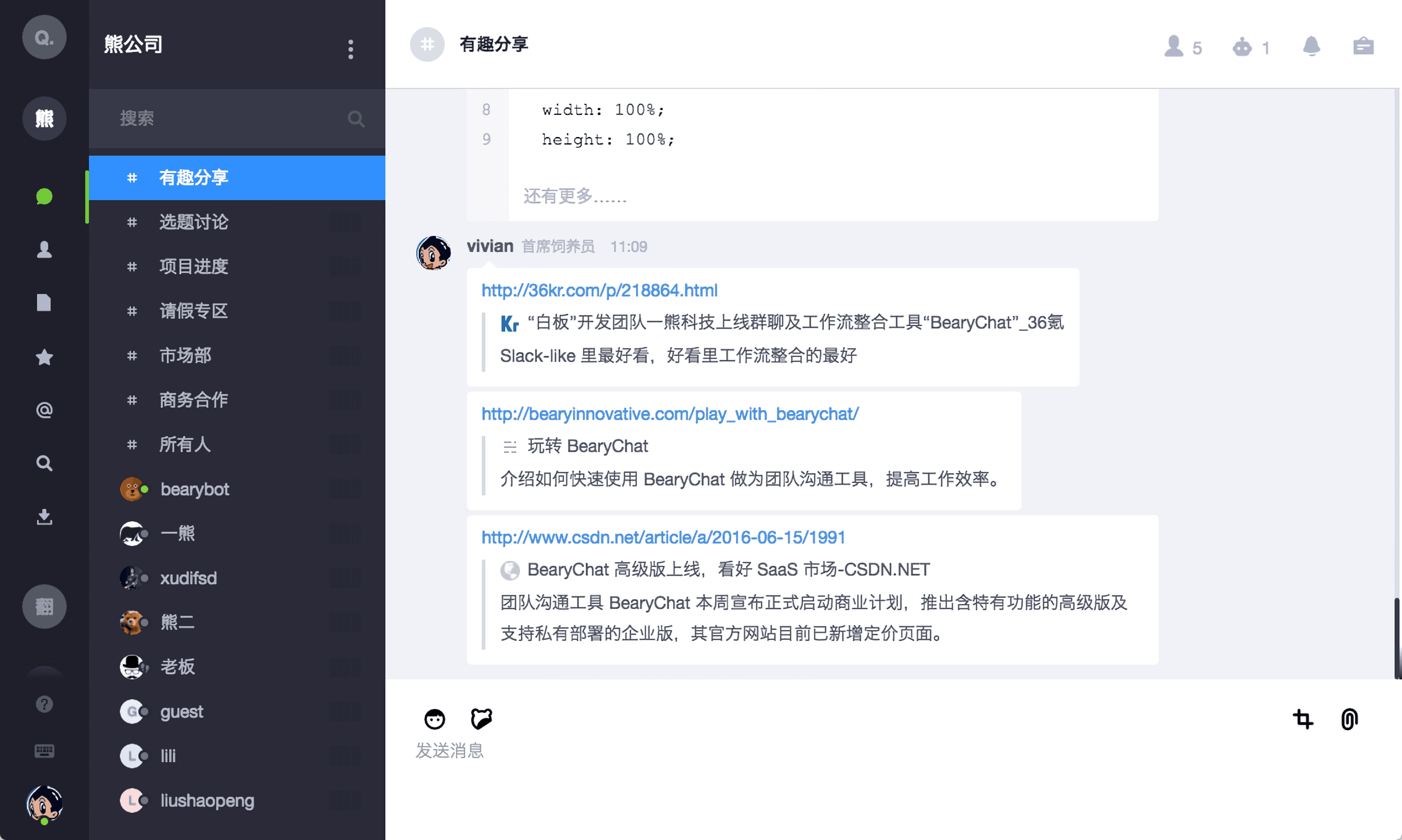
Modularity had helped us ship, but it also encouraged us to group features by similarity rather than by the way people worked. We redesigned the layout around the existing product and its near-term direction.
A Clearer Layout
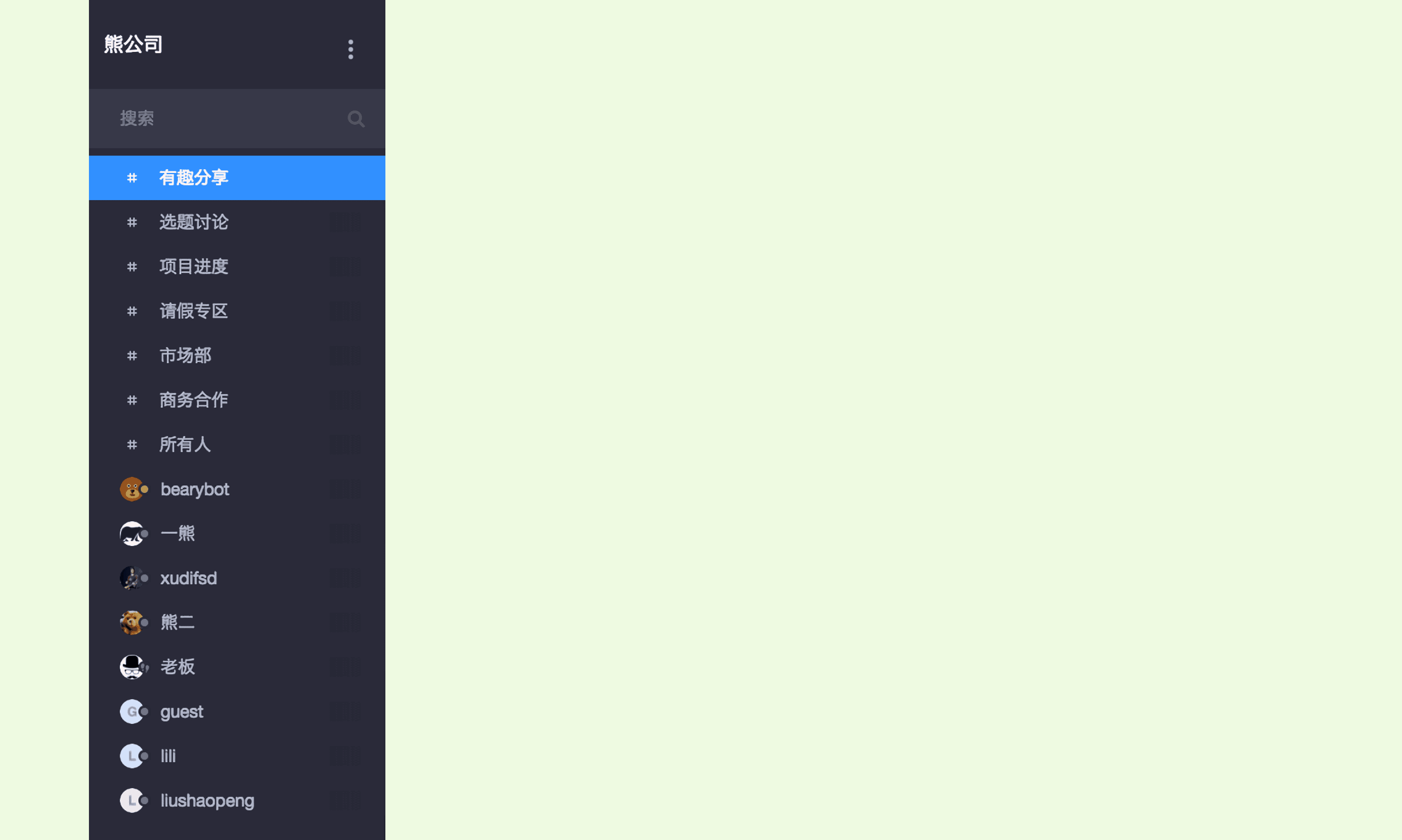
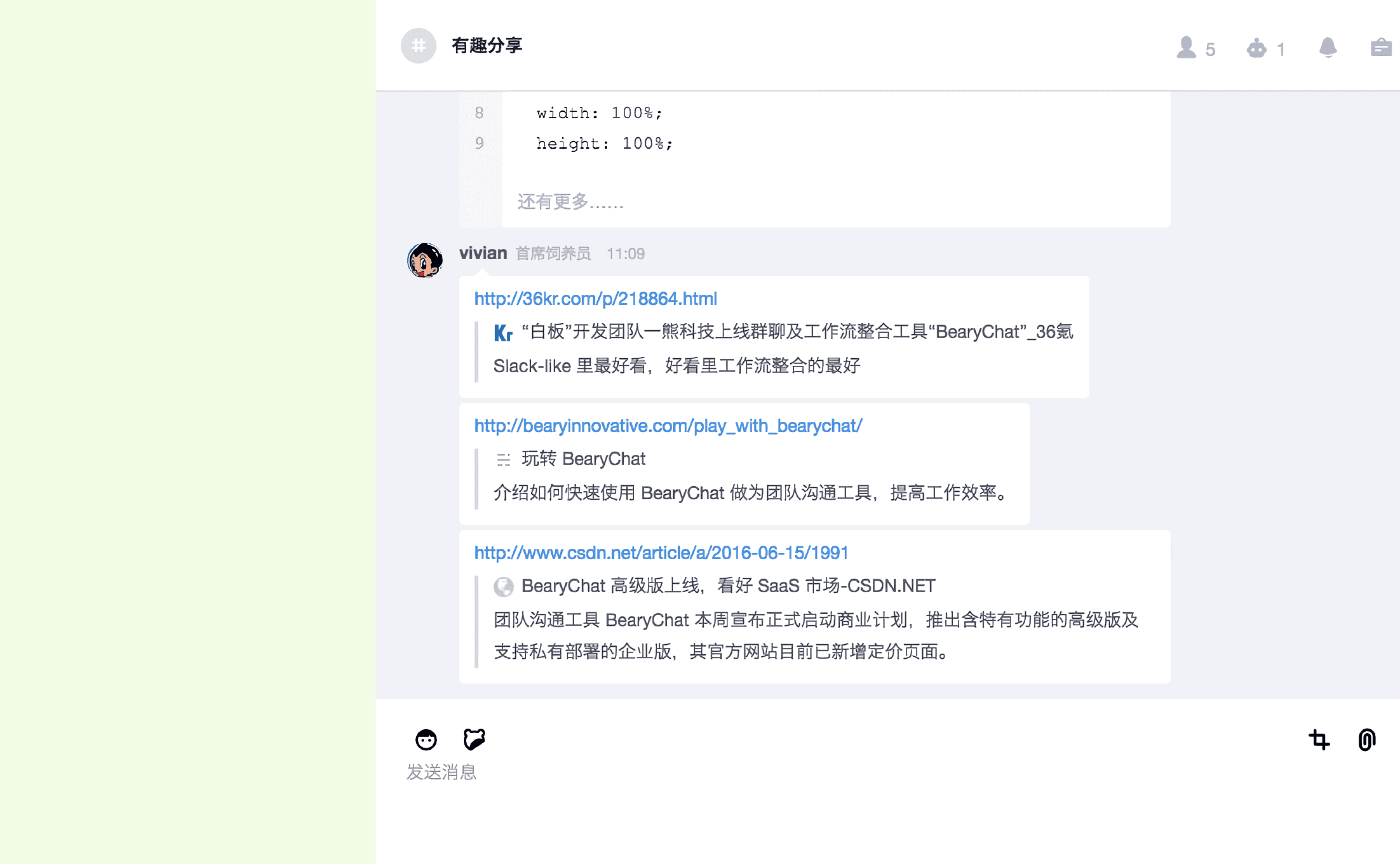
The new structure separated navigation from conversation:
- Hierarchical navigation organized features into business-focused modules, making the product easier to understand and customize.
- The content area kept the conversation and message input central. Files, saved information, and contacts remained connected to the conversations that gave them context.

Interactive Bots
Connected services were one of BearyChat's strengths. Earlier bots mostly forwarded updates and sent people back to another service to act. The “Interactive Robots” plan aimed to bring those actions into the conversation.
- The short-term plan introduced interactive inputs, buttons, and immediate feedback within bot messages.
- The longer-term plan proposed a marketplace where people could share bots for free or offer paid integrations.